News & Resources
Staying Active in Retirement: How Community Leads to a Fuller, Happier, Healthier Life
If your parent had to choose a retirement community for themselves, their main priority is most likely having their own space. Anything beyond that, they consider just a perk.
And as their child, you don’t want them to settle. Because while you want them to maintain their independence, you also want them to prioritize their physical health, safety, and care. Those are non-negotiables, and for good reason.
While independence is important, it’s not the only thing that contributes to a full life after retirement. Older adults need mental, physical, and emotional stimulation to maintain their health and happiness.
Why Staying Active Matters in Retirement
An active lifestyle is important no matter your age, but as older adults, it affects everything: quality of life, mobility, independence, and even potential longevity. According to the Centers for Disease Control and Prevention, staying physically active after age 65 offers benefits such as:
Immediate Results
- Improved sleep quality
- Reduced feelings of anxiety
- Reduced blood pressure
Long-Term Results
- Reduced risks of developing dementia (including Alzheimer’s disease)
- Reduced risk of depression
- Lowered risk of heart disease, stroke, and type 2 diabetes
- Lowered risk of eight cancers
- Reduced risk of weight gain
- Lived independently for a longer time
- Improved bone health
- Reduced risks of falls
Physical activity is just one piece of the health puzzle.
When paired with meaningful relationships and opportunities to learn and explore, physical activity contributes to a healthier, more fulfilling life.
However, that can be easier said than done. Retirement is a huge life change, and without an easy and regular way to get moving, socialize, or try something new, it can become part of the retirement routine to just stay home.
That’s where community can make a difference.
How Community Makes Staying Active Easier
At their current home, a life plan community, even with all the newfound time your parents are learning to enjoy, older adults need to actively prioritize their health and wellness, which is not always easy.
- The local gym might not have the classes they like, or their neighborhood might not be conducive to long walks.
- Their closest friends might not be that close, making get-togethers feel fewer and farther between.
- Yardwork might start to feel overwhelming.
When these things become a burden rather than an opportunity, staying engaged can feel overwhelming.
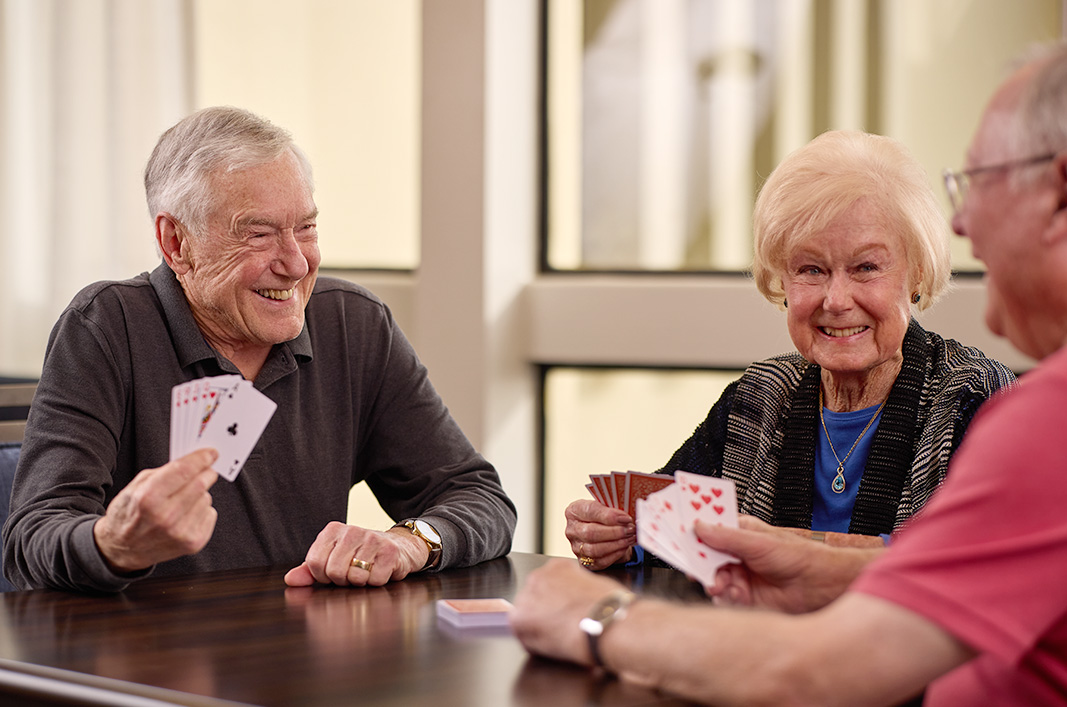
On the other side of the retirement coin lies a community with numerous classes to try, walking groups to join, and activities available on a schedule that works for them. Communities for retirement offer opportunities to connect with others on the same walk of life, whether it’s meeting for lunch or a chance run-in on the way to the pool. Classes and learning opportunities are not sporadic and hard to find; they are offered regularly and right down the hall.
All of these activities and enrichment classes are made possible because, in a community, living spaces and the rest of life happen in the same building. There are no long car rides, researching endlessly for a class or activity, or managing schedules to see friends once a month. Everything is accessible, and residents have the freedom to choose what makes them the most fulfilled.
Finding the Right Balance of Independence and Community
You are here because you know that finding the right community for your parent(s) goes beyond the floor plan. Their day-to-day and overall experience is just as important as the number of rooms in the apartment. Ensure they have all the opportunities to keep them healthy and happy by asking the following questions.
Community Checklist
- Are there opportunities available for physical activity and wellness?
- Are there classes, events, and outings that match their interests?
- Are there inviting spaces to spend time with other residents?
- Can they choose how involved they want to be?
- What services and care options are available if their needs change?
Their independence should remain central to the decision; establish a baseline in every community, then look at these aspects on top of that to reach the final important decision.
More Opportunities for a Full Life
At Sequoia Living life plan communities, residents have opportunities to build friendships, explore new experiences, and stay engaged in ways that feel meaningful to them—all while maintaining their independence. Read about a few of the ways our residents continue to Never Stop Growing.
Because an active life is not measured by how many activities fill the calendar. It’s about having things to look forward to, people to share them with, and the freedom to choose what comes next.
And for you, that can mean feeling confident that your parent has more than a place to live. They have opportunities to keep living a full life.